Electric Two-Wheeler Maintenance Cost: How Low Is It Really?
Introduction
When purchasing an electric two-wheeler, many buyers focus primarily on the purchase price. However, experienced fleet operators, delivery companies, and long-term riders know that the initial price is only one part of the total investment. The real expense comes from owning and operating the vehicle over several years.
Unlike gasoline motorcycles, electric two-wheelers have fewer moving parts, require less routine servicing, and eliminate many maintenance items associated with internal combustion engines. For both individual riders and commercial fleet owners, understanding these maintenance costs can help reduce the Total Cost of Ownership (TCO) and maximize return on investment.
Why Are More Buyers Focusing on Maintenance Costs Instead of Purchase Price?
For professional buyers, especially delivery companies and fleet operators, purchasing a vehicle is a long-term business decision rather than a one-time expense. A scooter that costs slightly more upfront may save thousands of dollars in maintenance, repairs, and downtime throughout its service life.
For example, a fleet of 100 electric scooters used for food delivery can travel hundreds of thousands of kilometers each year. Even a small reduction in annual maintenance cost per vehicle can translate into significant savings across the entire fleet. Lower maintenance also means higher vehicle availability, allowing businesses to complete more deliveries with fewer interruptions.
Individual riders are also becoming more cost-conscious. Rising fuel prices and increasing labor costs have encouraged consumers to compare not only the purchase price but also the long-term ownership cost.
What Maintenance Does an Electric Two-Wheeler Require?
Although electric two-wheelers require significantly less maintenance than gasoline motorcycles, they are not completely maintenance-free. Regular inspections and preventive maintenance remain essential to ensure safety, reliability, and long service life.
The battery is the most valuable component and should always receive the greatest attention. Proper charging habits, avoiding deep discharge, and keeping the battery within the recommended temperature range can significantly extend its lifespan. For fleet operators, battery health monitoring systems can further reduce unexpected replacement costs.
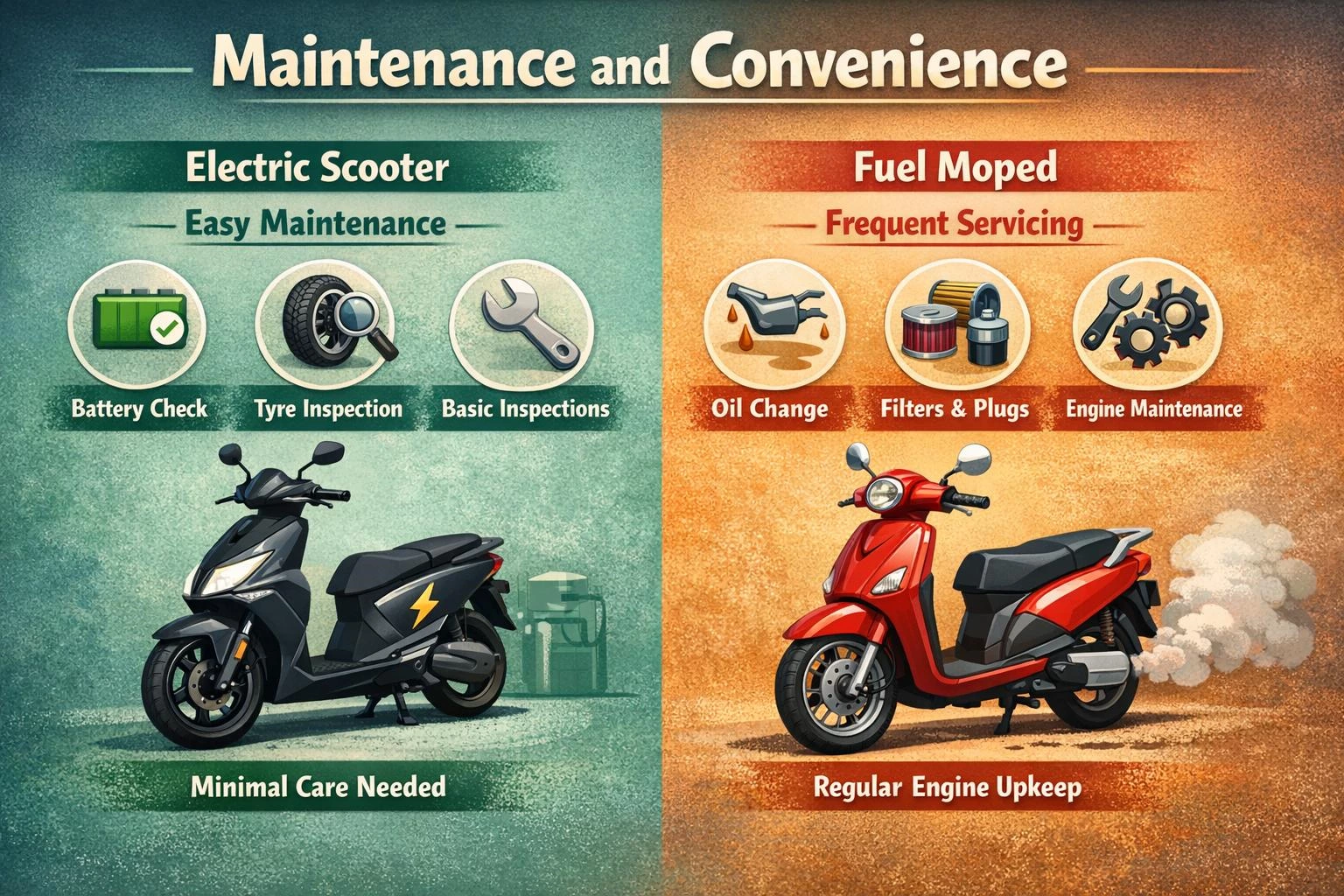
Other routine maintenance items include brake pads, tires, suspension components, lighting systems, and electrical connectors. Since electric motors have very few wearing parts and do not require engine oil, spark plug replacement, air filter cleaning, or transmission servicing, maintenance schedules are much simpler than those of conventional motorcycles.
For commercial fleets, preventive maintenance is more effective than reactive repairs. Scheduling inspections based on mileage rather than waiting for failures helps reduce downtime, improve operational efficiency, and extend the lifespan of every vehicle in the fleet.
How Much Does It Cost to Maintain an Electric Two-Wheeler Each Year?

The annual maintenance cost of an electric two-wheeler depends on factors such as mileage, road conditions, riding habits, and battery type. However, compared with gasoline motorcycles, electric models generally require significantly lower maintenance expenses throughout their service life.
For individual commuters traveling 20–40 kilometers per day, routine maintenance is typically limited to replacing brake pads, tires, and occasionally inspecting electrical components. Battery replacement is the largest long-term expense, but when its cost is spread over several years of use, the annual maintenance cost remains relatively low.
For delivery fleets operating 80–150 kilometers or more per vehicle each day, maintenance frequency naturally increases due to heavier usage. Tires and brake components wear faster, while batteries experience more charging cycles. Nevertheless, because electric powertrains eliminate engine maintenance, oil changes, clutch repairs, and fuel system servicing, the overall operating cost remains considerably lower than that of gasoline motorcycles.
For fleet managers, the key metric is often the maintenance cost per kilometer rather than the annual maintenance bill. Lower maintenance cost per kilometer directly improves fleet profitability and provides a competitive advantage in industries such as food delivery, courier services, and urban logistics.
How Different Battery Technologies Affect Maintenance Costs
Battery technology has a direct impact on the long-term maintenance cost of an electric two-wheeler. Choosing the right battery is especially important for businesses planning to purchase dozens or even hundreds of vehicles.
- Lead-acid batteries offer a lower purchase price, making them attractive for budget-sensitive buyers. However, they generally have a shorter service life, lower energy density, and require more frequent replacement. Over several years of operation, the accumulated replacement cost may exceed the initial savings.
- Lithium-ion batteries have become the preferred choice for commercial fleets because of their longer cycle life, lighter weight, faster charging capability, and lower maintenance requirements. Although the initial investment is higher, their longer lifespan often results in a lower Total Cost of Ownership (TCO).
- Battery swapping systems are also becoming increasingly popular in high-mileage delivery operations. By separating battery ownership from vehicle ownership, companies can reduce vehicle downtime, simplify battery maintenance, and improve fleet utilization. This operating model is especially suitable for food delivery platforms and last-mile logistics providers.
Which Riding Habits Increase Maintenance Costs?
Even the most reliable electric two-wheeler can become expensive to maintain if it is operated improperly. Many maintenance issues are caused not by manufacturing defects but by poor riding and charging habits.
- Frequent overloading places excessive stress on the motor, suspension, brakes, and tires. For commercial delivery fleets, selecting vehicles with payload capacities that match actual operating conditions is far more cost-effective than continuously repairing overloaded vehicles.
- Improper charging practices, such as regularly draining the battery to extremely low levels or using incompatible chargers, can significantly shorten battery life. Fleet operators should establish standardized charging procedures and provide driver training to maximize battery performance.
- Ignoring routine inspections is another common mistake. Loose electrical connectors, worn brake pads, underinflated tires, and damaged suspension components may seem minor initially, but they often lead to larger repair costs if left untreated.
- By implementing preventive maintenance schedules and encouraging responsible riding habits, both individual users and commercial fleets can significantly reduce maintenance costs while improving vehicle reliability and safety.
How Can Fleet Operators Reduce Maintenance Costs?
For commercial fleet operators, reducing maintenance costs is not simply about purchasing cheaper vehicles—it is about optimizing the entire fleet management process. A well-managed fleet can significantly lower operating expenses while increasing vehicle uptime and productivity.
- The first step is selecting high-quality electric two-wheelers designed for commercial use. Vehicles equipped with reliable motors, durable frames, high-quality controllers, and long-life lithium batteries generally require fewer repairs and experience less downtime. Although the initial purchase price may be higher, the long-term savings often outweigh the additional investment.
- Preventive maintenance is another essential strategy. Instead of waiting for components to fail, fleet managers should schedule regular inspections based on mileage or operating hours. Replacing worn brake pads, checking tire pressure, and inspecting electrical connections before problems occur can prevent costly repairs and unexpected downtime.
- GPS tracking, battery monitoring, fault diagnostics, and maintenance reminders help managers identify potential issues early, improving vehicle availability while reducing maintenance expenses.
- Another effective strategy is partnering with manufacturers that provide stable spare parts supply, technical support, and after-sales service. For businesses purchasing vehicles in bulk, reliable after-sales support is just as important as product quality, ensuring repairs can be completed quickly and minimizing operational disruptions.
Does Low Maintenance Mean No Maintenance?
Electric two-wheelers are often described as "low-maintenance vehicles," but this should never be interpreted as "maintenance-free." Regular maintenance remains essential for ensuring safety, extending component lifespan, and maintaining consistent performance.
Routine inspections should include checking brake performance, tire condition, battery health, lighting systems, suspension components, and electrical connectors. These simple maintenance tasks require relatively little time and cost, yet they can prevent major failures and expensive repairs.
For commercial fleets, preventive maintenance also improves operational reliability. Vehicles that receive regular inspections are less likely to experience unexpected breakdowns during deliveries, reducing customer complaints and increasing service efficiency.
How to Choose an Electric Two-Wheeler with the Lowest Maintenance Cost?
Choosing the right electric two-wheeler involves much more than comparing purchase prices. Buyers should evaluate the vehicle's overall quality, reliability, and long-term operating cost before making a decision.
- Fleet operators should prioritize vehicles equipped with high-quality lithium batteries, efficient brushless motors, and proven electronic control systems. These components have a direct impact on reliability and significantly reduce the likelihood of unexpected maintenance.
- It is equally important to evaluate the manufacturer's production capacity and after-sales support. Companies offering OEM/ODM services, CKD/SKD solutions, readily available spare parts, and professional technical assistance can provide greater long-term value for distributors and fleet customers.
- Finally, buyers should consider the vehicle's intended application. Urban commuting, food delivery, cargo transportation, and shared mobility all have different operational requirements. Selecting a model specifically designed for its intended use can reduce maintenance costs, improve efficiency, and maximize return on investment throughout the vehicle's lifecycle.
Conclusion
While purchase price often attracts the most attention, maintenance cost ultimately determines how economical an electric two-wheeler is over its entire lifespan. For commercial fleets, lower maintenance translates directly into higher vehicle availability, lower operating expenses, and improved profitability. For individual riders, reduced servicing requirements mean lower ownership costs and a more convenient riding experience.
Choosing a high-quality electric two-wheeler from a reliable manufacturer is one of the smartest long-term investments. By considering battery technology, component quality, after-sales support, and preventive maintenance, both businesses and individual buyers can maximize vehicle performance while minimizing lifetime operating costs.
(FAQ)
1. Are electric two-wheelers cheaper to maintain than gasoline motorcycles?
Yes. Electric two-wheelers generally require less maintenance because they have fewer moving parts. They do not need engine oil changes, spark plug replacement, air filter maintenance, or transmission servicing. Most routine maintenance focuses on the battery, brakes, tires, and electrical system.
2. What is the biggest maintenance expense for an electric scooter?
For most users, the battery is the most expensive component over the vehicle's lifetime. However, with proper charging habits and regular inspections, a high-quality lithium battery can last for several years, significantly reducing replacement costs.
3. Are electric two-wheelers suitable for delivery fleets?
Absolutely. Electric two-wheelers are widely used in food delivery, courier services, and urban logistics because of their low operating costs, high energy efficiency, and simple maintenance requirements. Many fleet operators achieve substantial savings compared with gasoline-powered vehicles.
4. How often should an electric two-wheeler be serviced?
Routine inspections are recommended every few thousand kilometers or according to the manufacturer's maintenance schedule. Fleet vehicles operating under heavy workloads may require more frequent inspections to ensure maximum reliability.
5. Which battery type offers the lowest long-term maintenance cost?
Although lithium-ion batteries have a higher initial purchase price, they generally provide the lowest long-term maintenance cost due to their longer lifespan, higher efficiency, and lower replacement frequency.
6. Can good riding habits reduce maintenance costs?
Yes. Avoiding overloading, maintaining proper tire pressure, using the correct charger, and performing regular inspections can significantly extend the lifespan of key components and reduce repair expenses.
7. What should fleet buyers consider besides vehicle price?
Fleet buyers should evaluate battery quality, spare parts availability, manufacturer support, warranty coverage, technical service, and the vehicle's Total Cost of Ownership (TCO). These factors have a much greater impact on long-term profitability than the purchase price alone.