How to Choose an Electric Motorcycle for Delivery & Commuting
Introduction
Choosing the right electric motorcycle is not simply about comparing prices, motor power, or battery capacity. For dealers and importers, the real challenge is finding a model that matches local riding conditions, customer expectations, and long-term operating costs.
The requirements of a delivery rider are different from those of someone commuting to work every day. A delivery motorcycle may need a larger battery, stronger load capacity, and more durable components, while a commuter may prioritize comfort, affordability, and convenient charging.
For businesses sourcing electric motorcycles from China, choosing the right specifications is only part of the purchasing decision. Product quality, spare parts availability, customization options, shipping arrangements, and manufacturer reliability also affect long-term business performance.
This guide explains how to evaluate electric motorcycles for delivery and daily commuting, compare important technical specifications, calculate operating costs, and select a suitable Chinese manufacturer for wholesale cooperation.
1. Understand Your Target Market Before Choosing an Electric Motorcycle
Before contacting a manufacturer or requesting a quotation, start by understanding who will actually use the vehicles. A model that sells well in one market may not perform equally well in another because riding habits, road conditions, purchasing power, and local regulations vary.
Identify Your Main Customer Groups
Most potential customers can be divided into three groups:
-
Daily commuters: People who need an affordable and convenient vehicle for traveling between home, work, and nearby destinations.
-
Delivery riders: Workers who use motorcycles for food delivery, parcel delivery, and other short-distance commercial services.
-
Small business operators: Users who need a motorcycle for daily transportation, carrying small goods, or supporting local business activities.
These groups do not necessarily require completely different vehicles. However, their priorities are different. For example, a delivery rider may value battery range and payload capacity more than decorative features, while a daily commuter may prefer a lighter, more comfortable, and affordable model.
Evaluate Local Riding Conditions
Before selecting a product range, investigate the actual conditions in your target market:
-
Average daily riding distance.
-
Road quality and common road gradients.
-
Typical rider and cargo weight.
-
Availability of home or workplace charging.
-
Local repair services and spare parts networks.
For example, importers targeting cities with frequent hills should pay close attention to motor torque, controller matching, braking performance, and full-load climbing tests. In flatter urban areas, battery efficiency, comfortable riding, and purchase price may have greater influence on customer decisions.
Check Local Regulations Before Importing
Vehicle classification is an important purchasing consideration. Do not assume that the same electric motorcycle specification can be sold and registered under identical rules in every country.
For example, Brazil's CONTRAN Resolution 996/2023 distinguishes electric mopeds, motorcycles, electric bicycles, and other self-propelled mobility devices. Under the resolution, an electric vehicle with a maximum power of up to 4 kW and a maximum manufactured speed of 50 km/h falls within the electric moped definition, subject to the other applicable requirements. Vehicles exceeding the relevant limits may fall into different classifications.
Before placing a bulk order, confirm the required vehicle classification, homologation documents, registration procedures, safety equipment, and import requirements with local authorities or a qualified compliance specialist.
2. Delivery vs. Daily Commuting: What Type of Electric Motorcycle Should You Choose?
The first step in selecting a model is understanding how it will be used. Delivery and commuting may involve similar urban roads, but their operating patterns can be very different.
| Factor | Delivery Use | Daily Commuting |
|---|---|---|
| Daily mileage | Often higher | Depends on commute distance |
| Motor performance | Focus on load and climbing ability | Match normal road conditions |
| Battery | Prioritize usable range | Balance range and cost |
| Frame | Durability and payload | Stability and comfort |
| Brakes | Suitable for frequent stops | Reliable everyday braking |
| Maintenance | Minimize vehicle downtime | Convenient local servicing |
| Cost | Focus on operating cost | Focus on purchase and ownership cost |
Electric Motorcycles for Delivery Businesses
Delivery motorcycles are often used for longer hours and more frequent stops than ordinary commuting vehicles. Their specifications should therefore be evaluated under realistic working conditions.
Important considerations include:
-
Sufficient motor torque for carrying riders and cargo.
-
Battery capacity that matches the working schedule.
-
A frame and suspension system designed for the intended payload.
-
Reliable brakes for repeated stops.
-
Easily replaceable wearing parts.
-
Convenient charging or battery replacement arrangements.
A real-world pilot study by Boston Consulting Group (BCG) and the Indonesian electric mobility association AEML involved approximately 300 Gojek motorcycle riders. The study found that heavy users traveled around 100–150 km per day. Battery-swapping availability, vehicle power, and affordability were among the most important purchasing considerations.
For commercial users, vehicle downtime can directly affect income. A motorcycle that offers a lower purchase price but requires frequent repairs may become more expensive over time than a model with better durability and parts support.
Electric Motorcycles for Daily Commuting
Daily commuters usually have more predictable travel patterns. They may travel between home and work, make short shopping trips, or visit nearby locations.
For this segment, consider:
-
Comfortable seating and riding position.
-
Suitable battery capacity for the daily route.
-
Convenient charging at home or work.
-
Practical vehicle dimensions and parking convenience.
-
A competitive purchase price.
-
Accessible maintenance and replacement parts.
A commuter who travels 20–30 km per day may not need the same battery configuration as a delivery rider covering 80 km or more. Offering different configurations can help dealers serve more customer groups without making every model unnecessarily expensive.
Can One Electric Motorcycle Serve Both Purposes?
Yes, provided that the motorcycle is designed and configured for the combined requirements.
A practical dual-purpose model should offer balanced motor performance, sufficient battery capacity, comfortable seating, reliable braking, and reasonable payload capacity. It should not be unnecessarily heavy or expensive for everyday commuters.
For dealers, dual-purpose models can be a useful part of a product portfolio. However, actual demand should be confirmed through local sample testing and customer feedback before committing to large inventory quantities.
3. Seven Key Specifications to Check When Sourcing Electric Motorcycles from China
Product specifications should be evaluated as a complete system. A high-capacity battery cannot compensate for an unsuitable motor, and a powerful motor does not automatically guarantee good range or reliable performance.
1. Motor Power and Performance
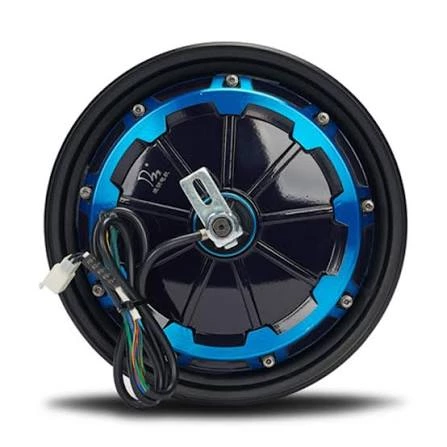
Motor power is one of the first specifications buyers compare, but rated power and peak power should not be confused.
Rated power indicates the motor's continuous output under specified conditions, while peak power describes the higher output available for a limited period. Ask the manufacturer to clearly state both figures and explain the controller configuration.
For delivery applications, motor torque, controller matching, and climbing performance under load are particularly important. A higher wattage rating alone does not prove that a motorcycle can handle steep roads or heavy cargo.
A practical test should include acceleration from a standstill, climbing on a representative slope, and sustained operation under the intended load. Record the rider weight, cargo weight, road gradient, battery state of charge, and ambient conditions so that different models can be compared fairly.
2. Battery Capacity and Real-World Range
Battery capacity is commonly expressed in voltage (V) and ampere-hours (Ah). Multiplying these values gives the nominal energy capacity in watt-hours (Wh).
Example:
72V × 32Ah = 2,304Wh = 2.304kWh
This means that a 72V 32Ah battery has a nominal energy capacity of approximately 2.304kWh.
However, nominal capacity is not the same as usable energy, and usable energy is not the same as actual riding range. Battery management limits, discharge conditions, speed, rider weight, cargo, road gradients, tire pressure, temperature, and riding style all influence the result.
A useful way to estimate range is:
Estimated Range (km) = Usable Battery Energy (Wh) ÷ Average Energy Consumption (Wh/km)
For example, if a battery provides 2,000Wh of usable energy and the motorcycle consumes an average of 40Wh per kilometer under a particular test condition, the estimated range is 50km.
This is an illustrative calculation, not a guaranteed product range. Ask the manufacturer for test results under clearly stated conditions, and conduct your own road tests before using a range figure in marketing materials.
For commercial buyers, it is also wise to plan a working range buffer rather than allowing vehicles to operate until the battery is nearly empty. A planning reserve of around 20% can be used as an initial operational guideline, then adjusted according to actual route tests and charging access. This is a planning recommendation, not a universal battery standard.
3. Lead-Acid vs. Lithium Batteries
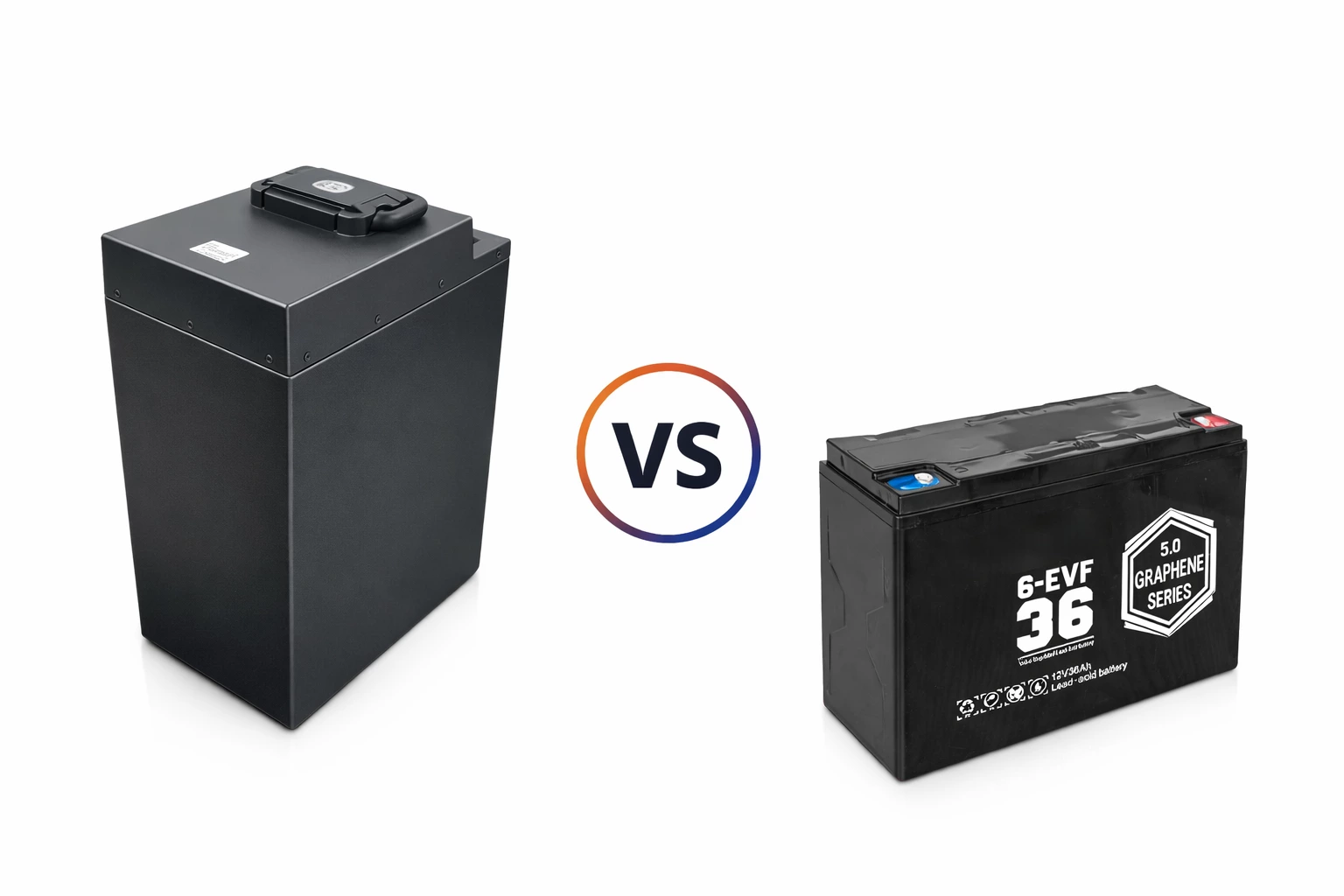
The battery type affects vehicle weight, purchase price, maintenance requirements, and replacement costs.
| Factor | Lead-Acid Battery | Lithium Battery |
|---|---|---|
| Initial cost | Generally lower | Generally higher |
| Weight | Heavier | Lighter for comparable energy |
| Energy density | Lower | Higher |
| Charging | Depends on battery and charger | Depends on chemistry and BMS |
| Maintenance | Depends on battery design | Depends on battery design |
| Replacement cost | Often lower | Often higher |
| Best purchasing approach | Budget-focused markets | Weight, range, and usage-focused markets |
There is no universally best battery option. Dealers should compare the complete battery system, including cell quality, BMS protection, charger compatibility, warranty terms, and local replacement availability.
For delivery fleets, battery weight and charging arrangements may have a significant effect on daily operations. For price-sensitive commuter markets, lead-acid models may still be commercially relevant if their purchase price and expected service life match customer expectations.
4. Payload Capacity and Frame Durability
Payload capacity is particularly important for delivery motorcycles. Buyers should check the manufacturer's maximum load rating and confirm whether it includes the rider, passenger, cargo, or a combination of these.
For example, a motorcycle with a stated maximum load of 150kg cannot be assumed to carry a 150kg delivery load in addition to the rider. The actual remaining cargo capacity depends on the manufacturer's definition and the vehicle's rated limits.
Check frame construction, welding quality, suspension capacity, rear rack design, and the condition of the vehicle after repeated load testing. Avoid selecting a model based only on appearance or an unverified load claim.
5. Wheel Size and Road Adaptability
Wheel size affects the way a motorcycle handles road surfaces, but larger wheels are not automatically better for every application.
Smaller wheels can help create compact vehicle designs, while larger wheels may be more suitable for certain uneven-road conditions. Actual performance also depends on tire width, tire construction, suspension travel, ground clearance, and overall vehicle geometry.
When comparing 10-inch, 12-inch, 14-inch, or 17-inch wheel configurations, ask for complete tire specifications and test the vehicle on the types of roads your customers actually use.
6. Braking System and Riding Safety
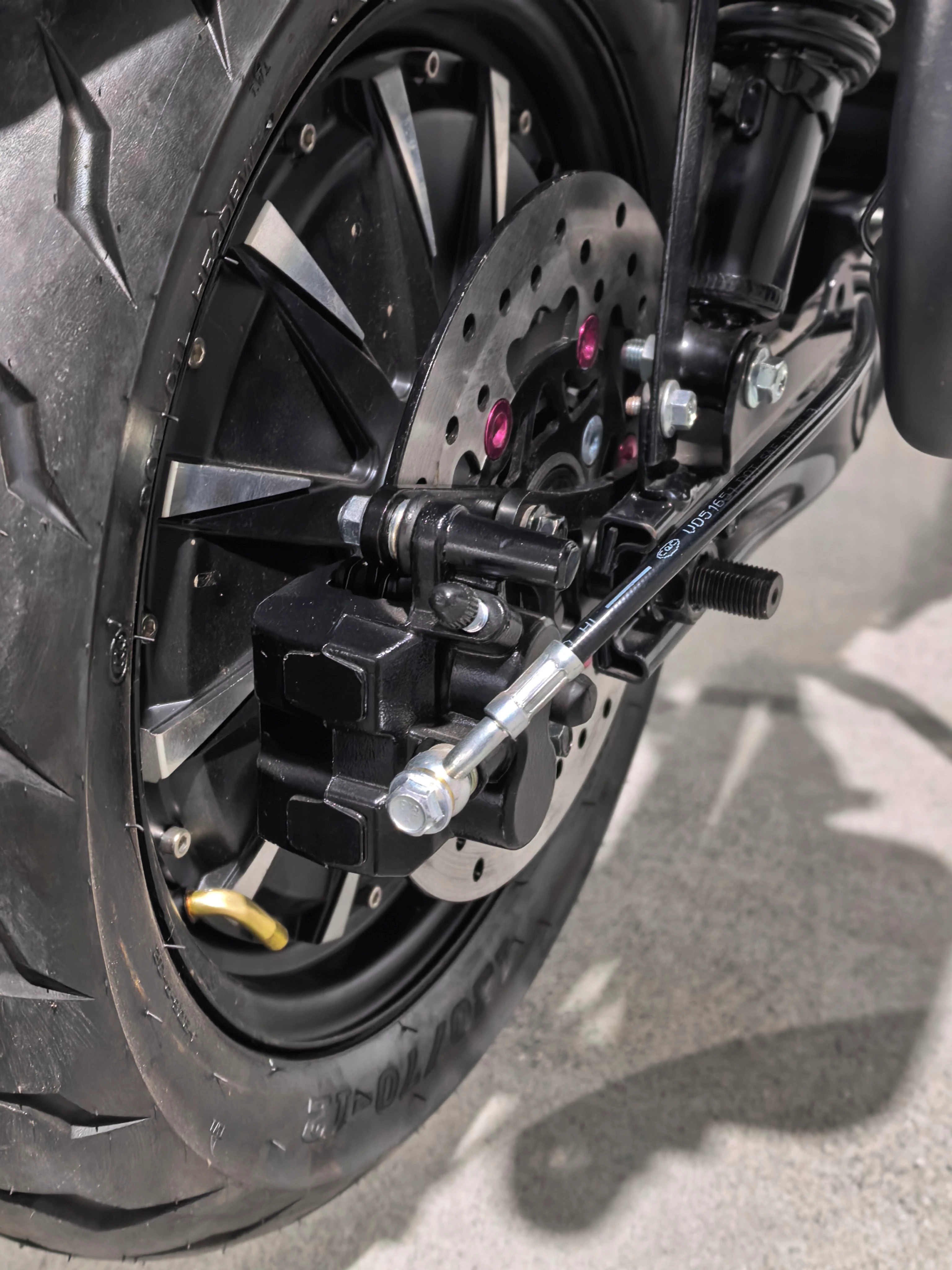
Delivery riders may stop repeatedly throughout the day, often while carrying additional weight. A reliable braking system is therefore essential.
Compare front and rear brake configurations, brake components, tire grip, suspension performance, and the vehicle's braking behavior under load.
A front disc and rear drum configuration may be suitable for some models, while other applications may benefit from disc brakes at both ends. The correct choice depends on vehicle weight, speed, intended use, and verified braking performance rather than appearance alone.
7. Charging Time and Battery Convenience
Charging arrangements should match the customer's daily schedule. A commuter who can charge overnight may have different requirements from a delivery rider who needs to operate for several hours without interruption.
Check the charger output, battery compatibility, charging time under specified conditions, removable battery design, and the availability of safe charging locations.
Do not evaluate charging time using only the charger's advertised maximum output. Confirm the battery's charging limits, the charging curve where available, and whether the quoted time refers to a full charge or a partial charge.
4. How to Evaluate the Total Cost of Owning an Electric Motorcycle
A low factory quotation does not necessarily mean a low-cost product for the end user. Dealers and importers should evaluate the total cost of ownership (TCO), especially when supplying vehicles to delivery businesses or commercial fleets.
A practical TCO calculation should include:
-
Initial vehicle purchase price.
-
International freight, insurance, and import duties.
-
Local distribution and delivery costs.
-
Electricity or charging service costs.
-
Routine maintenance and replacement parts.
-
Battery replacement, where applicable.
-
Expected resale value.
Compare Electric and Gasoline Motorcycles Fairly
Electric motorcycles may reduce energy and certain maintenance expenses, but the financial result depends on local electricity prices, fuel prices, annual mileage, battery costs, and purchase price differences.
Use the following basic comparison:
Annual Energy Cost = Annual Distance ÷ Energy Efficiency × Local Energy Price
For an electric motorcycle, use kWh per kilometer and the local electricity price per kWh. For a gasoline motorcycle, use liters per kilometer and the local fuel price per liter.
For a more complete comparison, calculate costs over the same ownership period and include battery replacement, routine maintenance, and depreciation. Do not compare electricity costs alone with gasoline costs and present the result as total savings.
5. How to Choose the Right Electric Motorcycle Models for Your Local Market
Importers do not always need the largest number of models. A focused product portfolio with clear customer segments can be easier to market, stock, and maintain.
Build a Product Portfolio for Different Customer Needs
A practical starting portfolio could include:
| Product Positioning | Main Customer | Key Priorities |
|---|---|---|
| Entry-level commuter | Budget-conscious commuters | Purchase price, basic range, ease of use |
| Mid-range multi-purpose model | Commuters and light delivery users | Balanced performance, range, comfort |
| Higher-performance model | Frequent delivery and commercial users | Motor performance, payload, battery options |
These are product-positioning categories, not fixed motor-power standards. The actual specifications should be selected after researching local customer requirements and applicable regulations.
Choose Battery Configurations According to Local Demand
Some markets may prioritize lower purchase prices, while others may place greater value on longer range, lower vehicle weight, or removable batteries.
Instead of importing every possible configuration, start with a limited number of carefully selected options. This makes inventory planning easier and reduces the complexity of spare parts management.
Test Before Placing Large Orders
Before committing to a large order, importers should request samples and test them under local conditions.
A practical pilot program should include:
-
Test at least one sample of each shortlisted configuration.
-
Record actual mileage under representative routes.
-
Test the vehicle with the expected rider and cargo weight.
-
Check climbing performance, braking, and handling.
-
Record charging time and electricity consumption.
-
Ask local riders or dealers to provide feedback.
-
Review any faults and spare parts requirements before ordering in bulk.
A sample test can reveal problems that may not appear in a product specification sheet. It also gives dealers a more reliable basis for deciding which models deserve a larger investment.
6. What Should You Look for in a Chinese Electric Motorcycle Manufacturer?
Choosing the right vehicle is only half of a successful import strategy. A reliable manufacturer should be able to provide consistent product quality, clear technical information, dependable supply, and practical after-sales support.
Manufacturing Capabilities and Quality Control
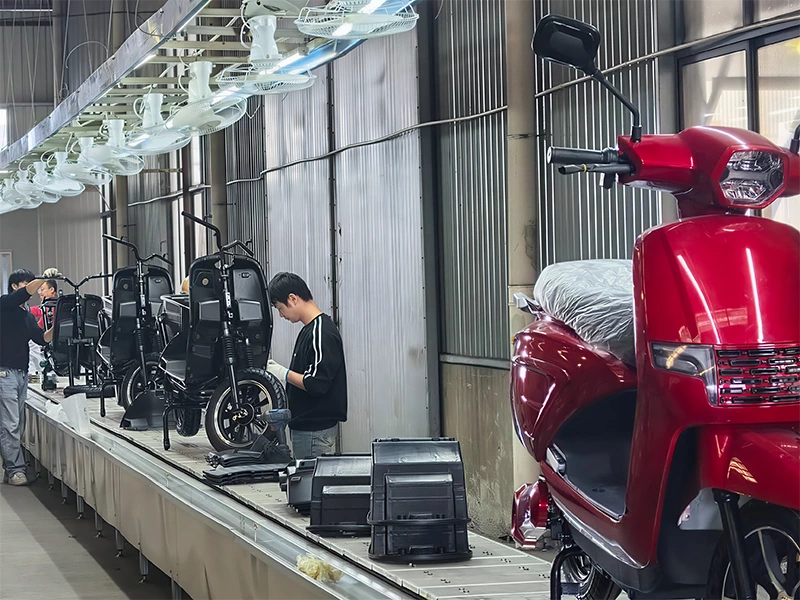
Ask the manufacturer how vehicles are assembled and inspected. A professional supplier should be able to explain its incoming material inspections, assembly checks, functional testing, and final quality control procedures.
Request relevant documentation, product specifications, inspection records, and photos or videos of the actual production process. Where possible, arrange a factory visit or an independent pre-shipment inspection.
OEM and ODM Customization
For distributors building their own brands, customization can help differentiate products in competitive markets.
Common options include:
-
Custom colors and decals.
-
Different motor and battery configurations.
-
Model appearance and component customization.
-
Private mold development.
-
Brand logos and packaging.
Before confirming customization, ask about minimum order quantities, development costs, sample approval, tooling ownership, production lead times, and quality standards. These details should be agreed upon in writing.
Spare Parts and After-Sales Support
After-sales support is especially important for delivery vehicles because frequent use can increase the need for routine maintenance and replacement parts.
Ask the manufacturer to provide a spare parts list, recommended maintenance schedule, warranty terms, technical documentation, and procedures for handling quality issues.
A supplier that can consistently provide compatible parts and technical assistance can help local distributors reduce repair delays and protect their reputation.
Shipping and Supply Options
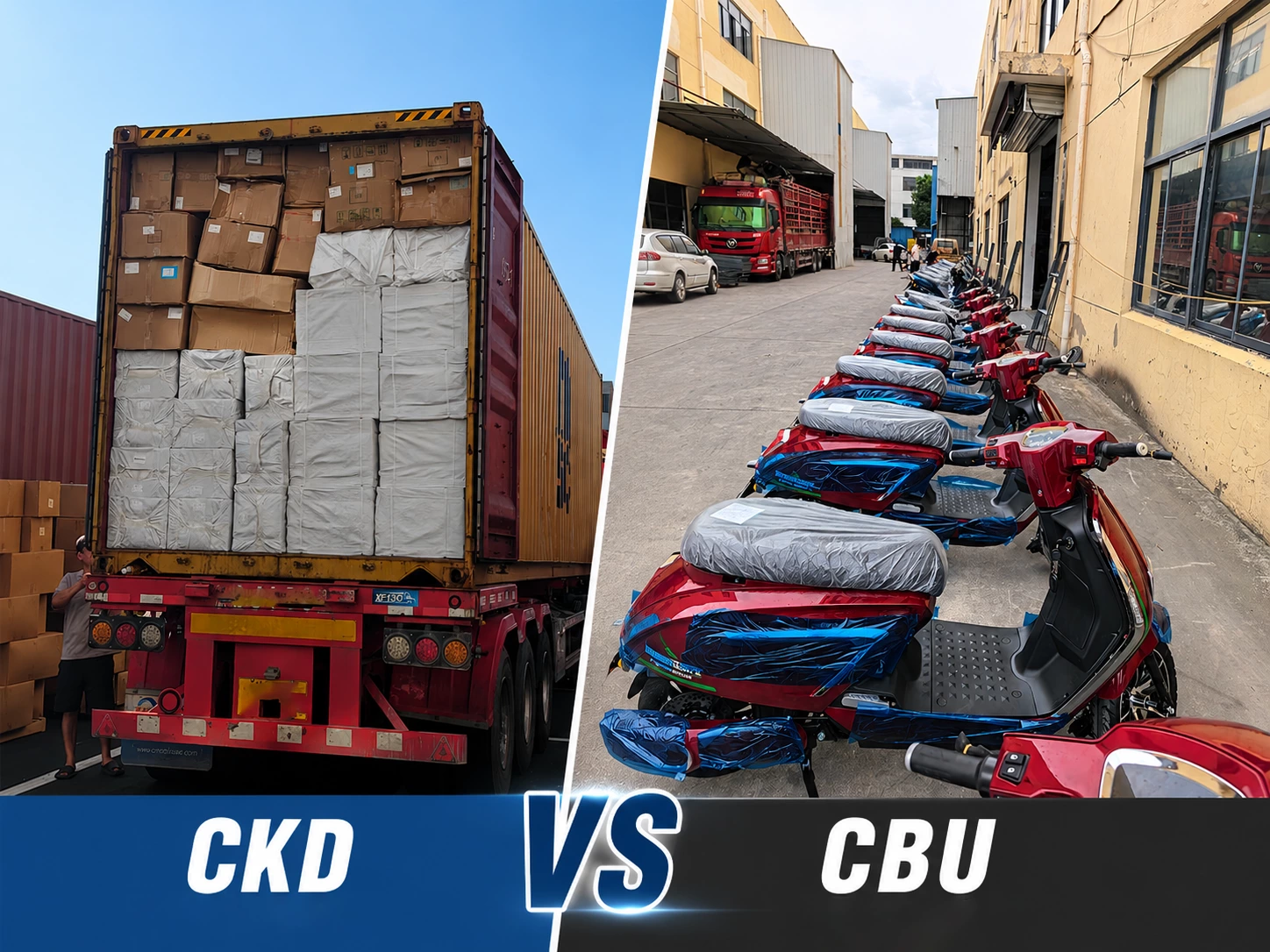
Depending on the destination market and local assembly capabilities, importers may consider complete vehicle shipments or CKD/SKD arrangements.
Complete vehicles can simplify local distribution, while CKD or SKD solutions may be worth evaluating when local assembly, labor, logistics, or regulatory requirements make them commercially suitable.
Before ordering, confirm the packaging method, container loading plan, shipping documents, production schedule, delivery terms, and responsibility for handling transport damage.
7. Frequently Asked Questions
What is the best electric motorcycle for delivery?
The best model depends on daily mileage, payload, road conditions, charging access, and local regulations. For commercial delivery, prioritize reliable motor performance, sufficient usable battery range, durable construction, effective brakes, and spare parts availability.
What motor power is suitable for an electric delivery motorcycle?
There is no single power rating suitable for every delivery application. Buyers should consider rated and peak power, torque, controller matching, total vehicle weight, cargo load, and road gradients. Always verify local power and speed regulations before importing.
How far can an electric motorcycle travel on one charge?
Actual range depends on usable battery energy and energy consumption. Speed, rider weight, cargo, road conditions, temperature, tire pressure, and riding style all affect the result. Ask for test conditions and conduct local road tests rather than relying only on advertised range.
Is a lithium battery better than a lead-acid battery?
Lithium batteries generally offer higher energy density and lower weight for comparable energy capacity, but usually have a higher initial cost. Lead-acid batteries may suit price-sensitive markets. The right choice depends on customer budgets, expected usage, replacement costs, and local service capabilities.
Can one electric motorcycle be used for both delivery and commuting?
Yes. A dual-purpose motorcycle can serve both groups if it offers a suitable balance of range, power, comfort, payload, and price. However, test the model with realistic delivery loads before recommending it for intensive commercial use.
What should importers check before buying electric motorcycles from China?
Importers should verify manufacturer capabilities, product specifications, quality control, certifications, battery documentation, warranty terms, spare parts availability, shipping arrangements, and after-sales support. Sample testing and a clear written purchase agreement are recommended before placing a large order.
Can Chinese manufacturers provide OEM and ODM electric motorcycles?
Many Chinese manufacturers offer OEM and ODM services, but customization scope, minimum order quantities, development costs, tooling arrangements, and production timelines vary. Confirm all commercial and technical requirements before starting a project.
What is the difference between CKD, SKD, and complete vehicle shipments?
Complete vehicle shipments contain assembled vehicles ready for the next distribution stage. CKD shipments generally involve more extensively disassembled components, while SKD shipments contain partially assembled vehicles. The exact packing and assembly scope must be confirmed with the supplier and checked against destination-country requirements.
Conclusion
Choosing the right electric motorcycle for delivery and daily commuting requires more than comparing specifications or factory prices. Importers need to understand local customer needs, evaluate real-world performance, calculate ownership costs, and verify the manufacturer's ability to provide consistent products and support.
The most effective purchasing strategy is to start with a clear target market, test a small number of suitable configurations, and expand the product range based on actual customer feedback. Working with a manufacturer that understands customization, quality control, and long-term supply can make this process more manageable.
Looking for a reliable electric motorcycle wholesale partner in China? Contact KeywayEV to discuss your market requirements and explore suitable electric two-wheeler solutions.
Why Work with KeywayEV for Electric Motorcycle Wholesale?
KeywayEV focuses on electric two-wheelers for overseas wholesale customers, including dealers, distributors, and importers looking for practical products and long-term supply cooperation.
Our product range covers different electric two-wheeler designs and configurations, helping buyers evaluate options for commuting, delivery, and other urban mobility applications.
KeywayEV supports OEM and ODM cooperation, including custom colors, decals, configurations, and private mold development. We also provide complete vehicles and spare parts to support overseas wholesale businesses.
Rather than focusing only on the lowest quotation, we emphasize product quality, service, and consistent cooperation. Our goal is to help distributors build a product range that fits their market and supports their long-term business.
If you are planning to source electric motorcycles from China, share your target market, preferred models, motor and battery requirements, and estimated order quantity with our team. We can discuss suitable configurations and wholesale cooperation options.
Website: https://www.keywayev.com
WhatsApp: +86 13179685671
WhatsApp: +86 13382429921